One More Time...

 (a continuation of sorts from the last post)

A couple of posts back I quoted G.K. Chesterton. I'm including here in case you missed it:

"But perhaps God is strong enough to exult in monotony. It is possible that God says every morning, "Do it again" to the sun; and every evening, "Do it again" to the moon. It may not be automatic monotony that makes all daisies alike; it may be that God makes every daisy separately, but has never gotten tired of making them. It may be that He has the eternal appetite of infancy; for we have sinned and grown old, and our Father is younger than we.”

Yesterday we spent some wonderful time with family, most of it at the Gaylord-Pickens Museum in Oklahoma City. 

Pardon a bit of brazen bragging. Our first-born, Corey, has an exhibit currently on display there. A while back he embarked on a year-long project to create a poster a day for 366 days. The project is called the "Daily Artifact." You can see it at the Gaylord-Pickens until April 5.
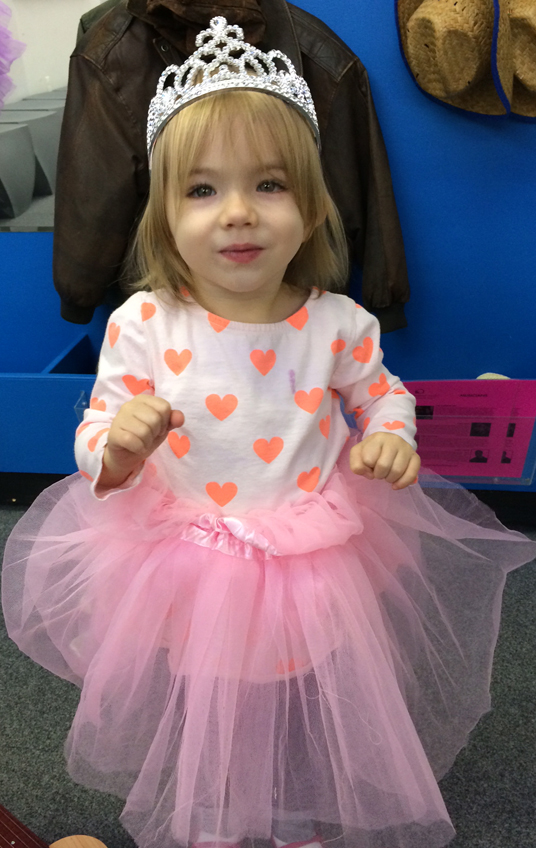
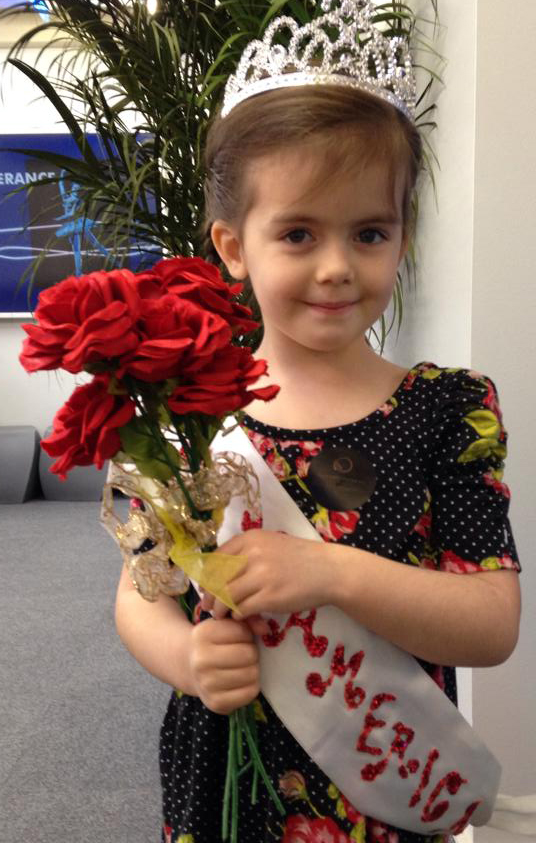
While you are there, take time to tour the Oklahoma Heritage Museum which is a part of the Gaylord-Pickens. One of the cool things there is a "dress-up" room for kids. The kids can choose to be folk musicians, astronauts, ballerinas (or as our two-year old grand-girl calls them "rina-rinas"), a Miss America and more roles that are a part of Oklahoma's culture.

So, as a follow up to the last post on the value of creativity and Chesterton's warning about sinning and growing old: don't forget to play, or make something.

Can You Forget How?

SEVERAL PEOPLE HAVE SENT ME THIS LINK and recommendation for an article at www.huffingtonpost.com called: 18 Things Highly Creative People Do Differently.

Already I'm skeptical and I haven't even read it. I doubt that the article was written by a creative person, because creative people are unlikely to allow themselves to be constrained by a numbered list.


Okay, now I've read it. My skepticism holds, although it is an interesting article, worth the time.

I also Googled "characteristics of creative people" and got over 38 million results. Many of the hits were things like: 5 Signs, 9 Traits, 10 Reasons; stuff like that; more lists; more skepticism.

One thing the Huffington Post article acknowledges right away is just how hard it is to nail down Creativity.

Neuroscience paints a complicated picture of creativity. As scientists now understand it, creativity is far more complex than the right-left brain distinction would have us think (the theory being that left brain = rational and analytical, right brain = creative and emotional). In fact, creativity is thought to involve a number of cognitive processes, neural pathways and emotions, and we still don't have the full picture of how the imaginative mind works.

"It's actually hard for creative people to know themselves because the creative self is more complex than the non-creative self," Scott Barry Kaufman, a psychologist at New York University who has spent years researching creativity, told The Huffington Post. "The things that stand out the most are the paradoxes of the creative self ... Imaginative people have messier minds."

He's right. At least for me. I don't know whether I'm creative or not. I do know this: I value creativity highly. I love the creative process. I love the outcomes of the process. I love the surprises that come along the way. I also know this: I want to help create environments where creativity can thrive. To borrow Jesus' metaphor of good dirt, I would like to prepare fertile ground for seeds of creativity to be planted.

Karlee-The-Creative. Our oldest Grand-Girl. (Photo by her Daddy because she's too young for selfies, thank God)

Karlee-The-Creative. Our oldest Grand-Girl. (Photo by her Daddy because she's too young for selfies, thank God)

I consider one of the highest callings of being "Pops"--to provide the Grand-Girls with opportunities for creative play, to fantasize, to make-believe, to have a place where they can be "outside the box." Certainly I want to honor the wishes of their parents, but I believe it is my prerogative, yea, even responsibility to say, "Sure, you can try to climb that." "Go ahead and poke it and see what happens." "Yes, you can wear that shirt with those pants." "Taste it and see." Shouldn't every kid have a place where the first line is always: "Once upon a time there were two Grand-Girls and a third on the way..."

Back to the Huffington Post article, I won't list all "18" because: one, you should read the article for yourself; and two, I'm so rebellious I believe there are at least 19 and probably more. But I'll list a few because I want to comment on them:

- They daydream. Guilty. I wrote a post on this subject called ARE YOU PAYING ATTENTION

- They observe everything. I like to think I do. Sometimes it's a curse though. For example, no matter where I go, I can't help straightening people's pictures for them, thinking, "How do they not see how crooked these are?"

- They take time for solitude. I am a certified Introvert. I am energized by solitude. For me the issue is taking time for social-tude. (I made that up.) This quote from Wendell Berry rings very true to me: "I'm a writer more than I am a talker."

- They seek out new experiences. Yep

- They ask the big questions. I sort-of attacked a guy in our own house a few years back because he implied that I had accepted a Christian worldview hook, line & sinker, no questions asked. How dare him. I'm old enough to be a grandfather and I'm still asking the big questions. 

- They people-watch. One of the things I enjoy most.

- They take risks. Not as much as I once did.

- They view all of life as an opportunity for self-expression. Why wouldn't you?

- They follow their true passions. Why live if you don't?!

- They surround themselves with beauty. As long as you define beauty as that which is true, good, whole, just and rehumanizing. AND aesthetically wonderful of course.

- They constantly shake things up. I hope so.

As my friend Mako Fujimura explained: We are created in the image of God, and the first thing we know about God is that He is a creator.

So, everyone has the capacity for creativity and are probably way more creative than they give themselves credit for. You've probably heard the story of the college art professor who was asked by her four-year old daughter, "Mommy what do you do?" The mother, wanting to answer in terms her daughter could grasp, replied, "I teach people how to draw and paint." The clear, honest, apropos reply from her little creative girl, "Did they forget how?"

It has been reported that if you ask a room full of kindergarteners, "How many of your are artists?" the entire room will raise their hands. Ask a classroom full of adults, fewer than 10% will. I know Creativity extends beyond artists, but the question is still:

Have we forgotten how to be creative?

Branching Out

I am not a dendrologist or an arborist. Heck, I'm not even a genealogist. But if this blog proves anything, it proves I'm not afraid to talk about stuff I know little about.

Several years and houses ago, we lived in a house that had an apricot tree in the backyard. It was pointed out to us that this was a special apricot tree--half the tree produced freestone apricots and the other half clingstone. I pretended I knew what the person was talking about with a surprised look and a "Really?!" 

If you're botany-challenged like me, the seed in the middle of apricots and their cousin the peach is called a stone. Sometimes the fruit clings to the stone, sometimes it doesn't--it's "free." Apparently our special tree was the result of a "graft" of two varieties.

Wouldn't family trees be more interesting if we could graft branches and twigs together? Like I said, I'm no expert, but it seems to me like this happens all the time, with wonderful results. When it does, people say things like, "He or she is like family to us." What a beautiful thing that our "trees" can branch outside the biological ties that bind.

I've always enjoyed watching basketball. I especially enjoy women's games because it seems that there's more finesse, strategy, and teamwork involved. Over the past few years, we've followed the women's team at Oklahoma Baptist University. It didn't happen randomly. Our two grand-girls live near OBU, their Daddy teaches there.

"Sisters" Harper, Allie, Karlee

"Sisters" Harper, Allie, Karlee

At OBU they have a tradition (in fact they seem to have hundreds of traditions) where families "adopt" one of the players. So four years ago, our son and his family adopted an incoming freshman from Houston named Allie. Allie didn't really need more family. Turns out she has a wonderful family back in Houston. But somehow when you graft branches together it takes nothing away from either tree, but results in something that enriches everyone.

Not only has this provided an opportunity to watch and cheer for this spunky, speedy guard and her teammates, but it has been so fun to watch the grafted relationship of two families become something, well, special. 

Allie is a senior now, wrapping up a very successful season with this team that could contend for a national championship. But more importantly she is a joy and someone very special to my grand-girls and their parents and therefore to me too. Thank you Allie. Welcome to the "family."

#5 Allie Brandenburg (photo borrowed from the OBU Athletics website without permission)

#5 Allie Brandenburg (photo borrowed from the OBU Athletics website without permission)

RECESS!

"Do not go where the path may lead, go instead where there is no path and leave a trail." --Emerson

IF YOU'VE BEEN READING THE LAST FEW POSTS, you know this quote from Ralph Waldo Emerson has had me thinking--about being a trailblazer.

I guess if we're supposed to be trailblazers, we need to know what one looks like. Maybe we can figure that out by taking a closer look at a few. A few of my favorites:

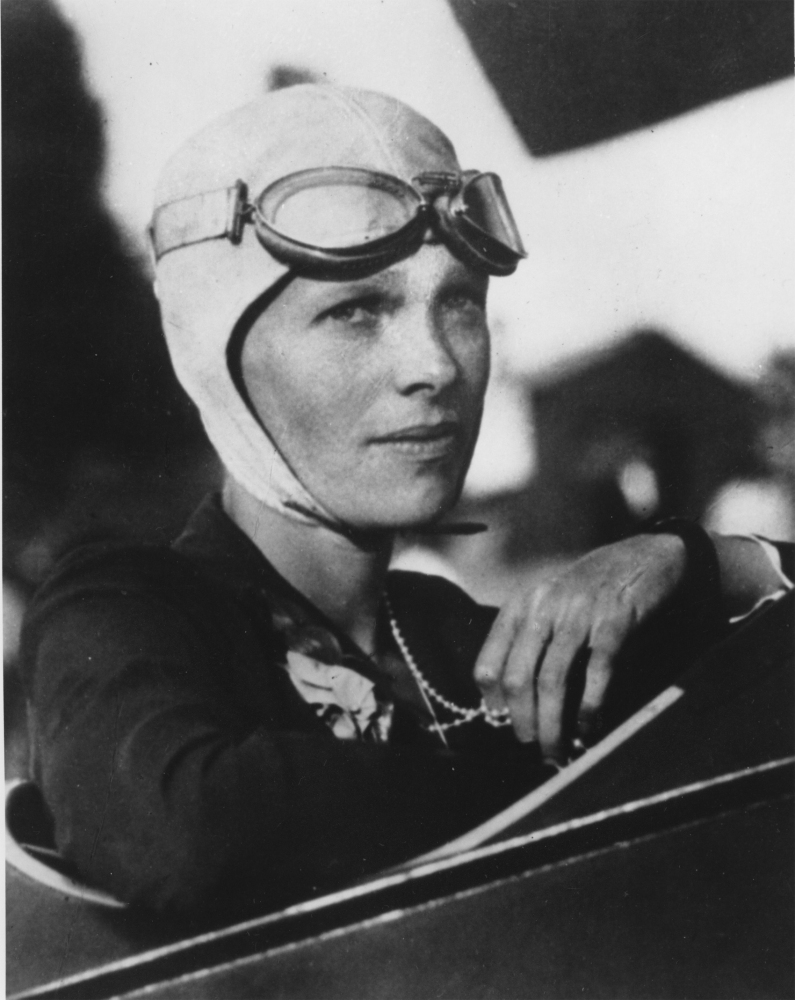
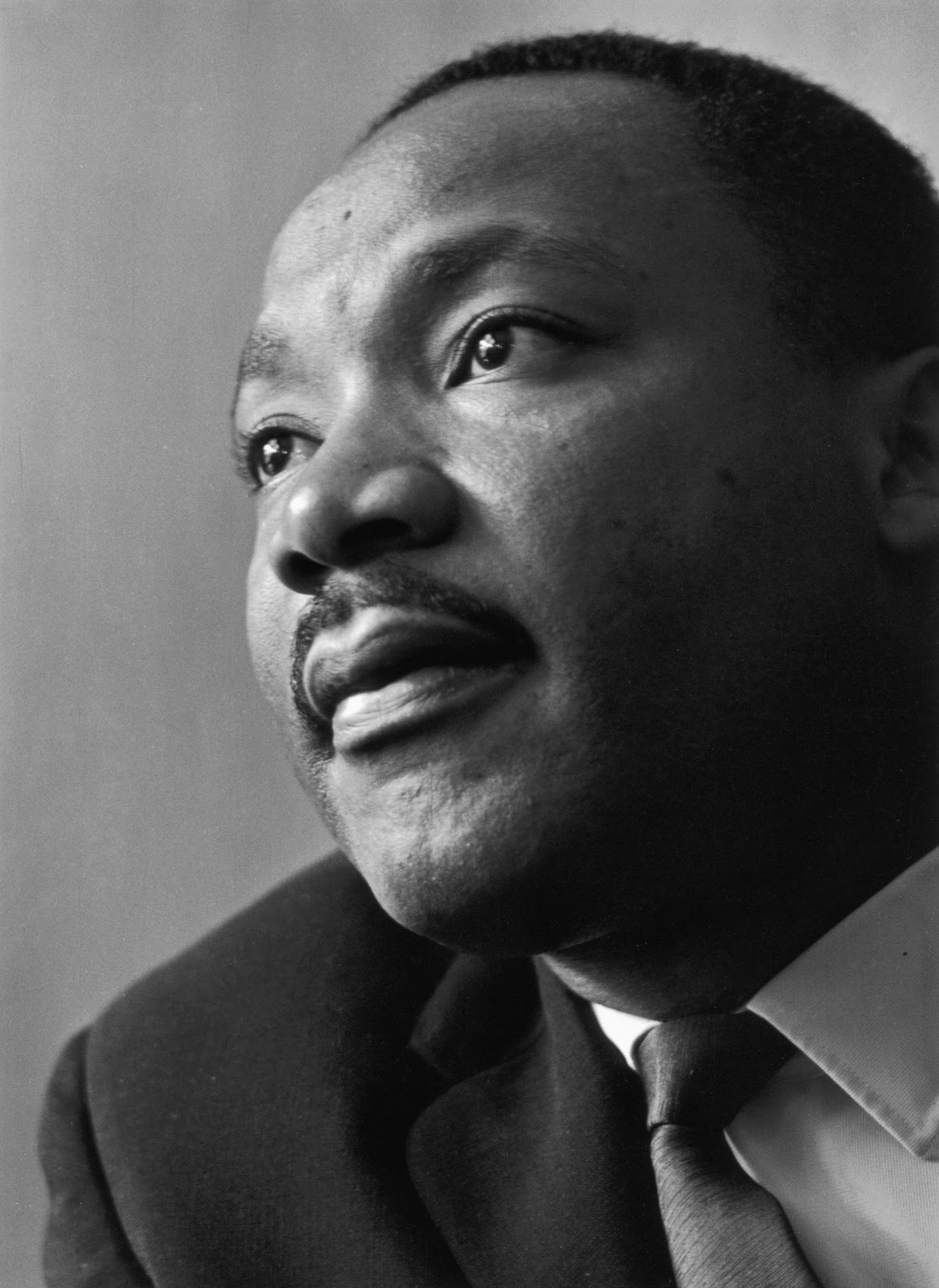
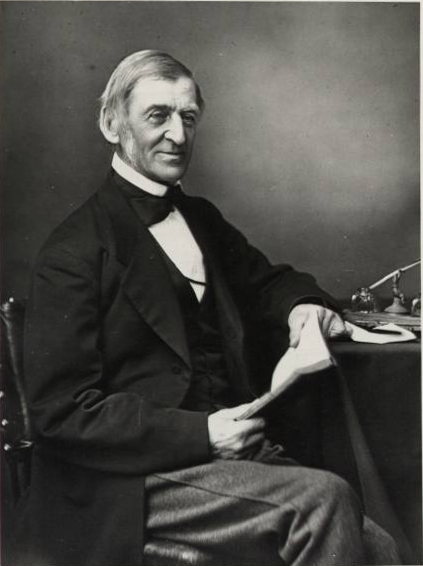
Left to Right: Amelia Earhart, pioneer; Dr. Jonas Salk, a very important trailblazer to all of us Baby Boomers; Dr. Martin Luther King, Jr., visionary; Steve Jobs, designer, solution finder; Ralph Waldo Emerson, philosopher, poet, worldview shaper.

So what comes to mind? Adventurous, activist, bold, badassed, curious, courageous, driven, determined, enlightened, earnest, free-spirited, fervent, etc. etc.

What about motive? What is the spark in the heart of a true trailblazer: altruism, notoriety, a death-wish, financial gain, service to a cause greater than themselves, or maybe they just can't help it.

Well; WHERE IS Ralph WALDO Emerson in the matter of trail-blazing? RECESS!

That's right, it just may be that Ralph Waldo Emerson is responsible for one of my favorite things about school: recess.

From the course description on Emerson, Thoreau and Transcendentalism taught by Dr. Ashton Nichols, University of Virginia:

"Where did the America we know today—so different in its fundamental views about almost every aspect of life as to be unrecognizable to our countrymen of two centuries ago—really come from? How, for example, did the colonial idea of the classroom as a place devoted to "breaking the will" and "subduing the spirit" of students, change to that of a vibrant, even pleasurable experience—including innovations such as kindergarten and recess—with children encouraged to participate actively in their own education?" 

Emerson and Thoreau are important (to me at least) because I tend hard to Transcendentalism: an emphasis on the divine in nature, on the value of the individual and intuition, and on belief in a spirituality that might "transcend" one's own sensory experience to provide a more useful guide for daily living than is possible from empirical and logical reasoning.

Before you can be a trailblazer, you have to believe that you are free to, and capable of, trail-blazing. If you hold to a view of pre-destination, you are obviously, pretty much placed on a predetermined path--obviously. If you hold to a religious creed that has the effect of breaking the will and subduing the spirit; why? 

"But perhaps God is strong enough to exult in monotony. It is possible that God says every morning, "Do it again" to the sun; and every evening, "Do it again" to the moon. It may not be automatic monotony that makes all daisies alike; it may be that God makes every daisy separately, but has never gotten tired of making them. It may be that He has the eternal appetite of infancy; for we have sinned and grown old, and our Father is younger than we.” G.K. Chesterton, trailblazer.

Maybe God wants us to have recess. Maybe He wants us to be immersed in creativity and play. Maybe that's the essence of trailblazing--having "the eternal appetite of infancy."