LEAVE IT BE

WHEN I FIND MYSELF IN TIMES OF TROUBLE... This post is installment #2 of a new series. In my last post I over-shared about my current state-of-mind regarding the current state-of-affairs. I said I'm searching for ways to find footing, forward-thinking, with a bit of escaping.

Maybe, I thought, that by revisiting the greatest hits of my First Coming-of-Age, in the late 60s, when we had a president of questionable integrity and motives, and were stuck in a needless and seemingly unending war, I could find in these songs familiar footing--remembering the zest and lust for life of an idealistic, long-haired whatever.
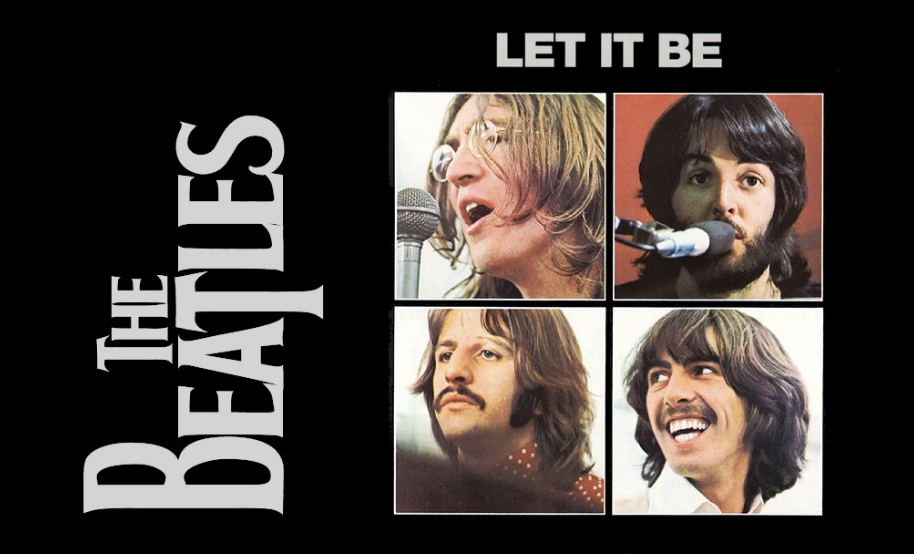
Let's think about The Beatles "Let It Be". The first recording of the song with the entire band happened on January 8, 1969, my 18th birthday. The song was written by Paul McCartney. Paul told a story about a dream he had had of his mother, Mary, who died of cancer when Paul was fourteen. He said he dreamed of his mother coming to him and saying, "It will be all right, just let it be."

When I find myself in times of trouble
Mother Mary comes to me
Speaking words of wisdom
Let it be
And in my hour of darkness
She is standing right in front of me
Speaking words of wisdom
Let it be

The title I chose for this post, "Leave it be", might look like a typo or the typical malaprop of an old man. It's actually a tip o' the hat to a wonderful piece of dialog from a movie called "Yesterday" about a weird occurence that leaves the world without any memory of The Beatles or their music except for just a few, including a young struggling musician who chooses to pass The Beatles amazing songs off as his own. In one scene from the movie he is playing one of the songs for his parents who thought he had given up on his singer/songwriter career. You can CLICK HERE to watch the clip on YouTube.

What if Paul had called his song "Leave It Be" or "Leave Him Be"? Does it change the perspective, if not the meaning? For me the song's three word lesson has always been a spirit of: "it is what it is". It could even be seen as benediction--sort of an "Amen" which means "so be it". I think that's a healthier way to look at status quo. A friend once wrote a book she titled using a fragment of a phrase from The Lord's Prayer. She called it: "On Earth As It Is".

To say "this too shall pass" doesn't mean we acquiesce--throwing in the proverbial towel. For example, at first glance it may seem utterly futile to write letters to our elected congresspersons from Oklahoma. As far as impacting their positions and loyalties, my letters mean nothing. But it gives me a bit of satifaction from that good old 60s transgressiveness to let them know I'm still here. I take consolation from verse two of Paul's song:

And when the broken-hearted people
Living in the world agree
There will be an answer
Let it be

For though they may be parted
There is still a chance that they will see
There will be an answer
Let it be

For those with a cranky old guy in your life, that third take on the title of the song might be good advice:

  • If he wants to take a nap every afternoon--leave him be.

  • If he wants to have Mexican food two days in a row--leave him be.

  • If he wants to watch multiple basketball games in a single day--leave him be.

  • If he wants to share his words of wisdon...

Please take a few minutes to watch the remastered recording session of The Beatles recording "Let It Be"! CLICK HERE.


BE CREATIVE

I CAN PLAY SO FAST AND LOOSE with facts and numbers; I could be a politician or tele-evangelist, but I’m neither. There’s an anecdote I’ve heard a few times, the actual numbers quoted are fluid but within my loose-fitting margin-of-error.

It goes like this: A teacher asks a kindergarten class, “How many of you are artists?” Roughly 100% raise their hand. Another teacher asks a seventh-grade class the same question, less than 10% raise a hand of affirmation. WHAT HAPPENS? WHAT ARE WE DOING TO KIDS?

Every child is an artist. The problem is how to remain an artist once he grows up.
— Pablo Picasso

“The child is the first artist. Out of the material around him he creates a world of his own. The prototypes of the forms which he devises exist in life, but it is the thing which he himself makes that interests him, not its original in nature. His play is his expression. But as the child ages: Imagination surrenders to the intellect; emotion gives place to knowledge. Gradually the material world shuts in about us until it becomes for us a hard, inert thing, and no longer a living, changing presence, instinct with infinite possibilities of experience and feeling.” —1907, The Gate of Appreciation: Studies in the Relation of Art to Life by Carleton Noyes, Quote Page 29, Published by Houghton Mifflin, Boston, Massachusetts.

Arts District. Tulsa, Oklahoma

Arts District. Tulsa, Oklahoma

Here’s another illustration you may have heard: The young child of a college art professor asks his parent about her job as a teacher, “What do you do?” The parent, trying to couch the answer in kid-terms replies, “I teach people how to draw and paint,” to which the kid says, “Did they forget how?” Isn’t is cutely true that a young, unspoiled mind is creative, they know it and they assume everyone is—unless they’ve forgotten how.

I will go so far as to confess that I believe “creative” is a relative term but I also believe that the most variable (adjective) variable (noun) is courage. In other words, you have to be somewhat fearless to be creative, at least in spurts. That’s my experience anyway.

For several years, I served on the board of an arts organization based in New York City called International Arts Movement or IAM. As a part of my work with IAM, I also served as a “creative catalyst” for a version of the movement here in Oklahoma City. I cherish all of those experiences. During that time I met some powerfully creative people: fine artists, poets, musicians, actors, dancers, novelists, architects, anthropologists, comics, teachers, students, journalists, illustrators, writers, filmmakers, chefs, designers, photographers, songwriters and more.

I remember in my first meeting with the board. I was sitting next to the founder and renowned painter, Mako Fujimura. I tend to doodle in meetings, making little drawings that might resemble 60s psychedelic concert posters. This thought kept racing through my mind: “Don’t doodle! You’re sitting next to one of the finest artists in the world right now!”

Crazy thing though about hanging out with phenomenal artists; the really really good ones are rarely arrogant at all about their creativity. In fact, it was an environment that was much more encouraging than intimidating. They actually want to foster creativity and curiousity and dabbling—and maybe even doodling. During that time I made several trips a year to NYC for board meetings and conferences.

One of my favorite places to go in the city was a place called the Jazz Standard , a jazz club in a basement below a restaurant called BLUESMOKE, founded by legendary restaurant creative, Danny Meyer. One night, at the Jazz Standard the guest artist was a pianist named Helen Sung. She was amazing. Then, lo & behold, I got to the IAM conference the next day, and there is Helen Sung herself. We had a wonderful visit. She was delightful, interesting and interested; the ideal conversationalist.

Recently, My Amazing-Missus and I checked out a fairly new jazz club in Tulsa called “Duet”. I had read about the place and its programming director Jeff Sloan. While we were enjoying some fine and creative dishes before the show started, Jeff stopped by our table to visit with us. I told him the club reminded me of the Jazz Standard; he said that it was one of the models they looked to when creating Duet. I highly recommend you visit Duet soon.

So, is this a post about creativity, a post about jazz clubs, a post where I get to drop names and act like a big shot, a post where I reflect on how much I love being in the midst of creative endeavors, a post encouraging everyone to muster the courage to create, a post where I lay down a bunch of words so I can call myself a “writer”, or a post remembering what used to be and looking forward to what might be? YES! Yes, it is every one of those things.

Want to play along? Up for a challenge? Why not squeeze the creative fruit and see if the juices flow? Doodle, draw, write a simple poem, go to a museum or art exhibit, go for a walk and take pictures (you probably have a camera in your pocket right now built in to that phone/calculator/calendar/flashlight/etc. Or write something.

Here, let me throw out a challenge; a prompt, as an idea for writing something. Sometimes that’s all it takes to get started. Below, I will include the lyrics to The Beatles' “Penny Lane”. Read them through a few times, listen to the song a few times. Don't worry much about the meanings of the lyrics. This is just a prompt. Now grab a pen and paper and write about your "Penny Lane". Everyone has one. Remember it? Write about what is "in your ears and in your eyes" as you ponder the street(s) where you grew up.

I would love to see what you write. Please send your essay to me: hey.pops.hey@gmail.com.

Next Post: Pops' Penny Lane, a.k.a. Quincy Avenue.

PENNY LANE
Lennon and McCartney

In Penny Lane there is a barber showing photographs
Of every head he's had the pleasure to know
And all the people that come and go
Stop and say hello

On the corner is a banker with a motorcar
The little children laugh at him behind his back
And the banker never wears a mack In the pouring rain, very strange

Penny Lane is in my ears and in my eyes
There beneath the blue suburban skies I sit, and meanwhile back

In Penny Lane there is a fireman with an hourglass
And in his pocket is a portrait of the queen He likes to keep his fire engine clean
It's a clean machine

Penny Lane is in my ears and in my eyes
A four of fish and finger pies In summer, meanwhile back

Behind the shelter in the middle of a roundabout
The pretty nurse is selling poppies from a tray
And though she feels as if she's in a play
She is anyway

In Penny Lane the barber shaves another customer
We see the banker sitting waiting for a trim
And then the fireman rushes in From the pouring rain, very strange

Penny lane is in my ears and in my eyes
There beneath the blue suburban skies I sit, and meanwhile back
Penny lane is in my ears and in my eyes
There beneath the blue suburban skies

Penny Lane

Sgt. Pepper & Other Memories

THIS IS THE 50th ANNIVERSARY of the release of The Beatles’ Sergeant Pepper’s Lonely Hearts Club, the album that made a huge mark on the music and recording industries and provided a sound track of sorts for my first coming-of-age.

Months ago, I read a book by Mary Karr called The Art of the Memoir. While reading, I took her challenge to give it a try—writing a memoir, not for publication or anything like that, in fact, not even for anyone ever to read, but as an exercise in remembering stories. Mary Karr warns in her book that it is not an easy thing to do and in fact can be dangerous.

I’ve said it’s hard. Here’s how hard: everybody I know who wades deep enough into memory’s waters drowns a little.
— Mary Karr, The Art of the Memoir

Still, I highly recommend you give it a try. Maybe go back in your life, grab an experience and write a few paragraphs. It is eye-opening, soul-searching, and scary.

She also warns that remembering and writing it all down can be hurtful to yourself and others and that being honest is hard to do. She’s right. I do want to be honest in my recollection of the past, but my memories are hazy and sketchy. I’ve apparently edited those memories over the years.

Above all, don’t lie to yourself. The man who lies to himself and listens to his own lie comes to a point that he cannot distinguish the truth within him, or around him, and so loses all respect for himself and for others. And having no respect he ceases to love. 
— Fyodor Dostoyevsky, The Brothers Karamazov

As I started on the challenge I knew I didn’t want to write my whole life’s story so I chose to focus on three summers, the first, 1967. Because, in the past few days, my mind has been drawn back to that time with of all the news of the Sgt. Pepper anniversary and re-release of the album, and these lyrics running through my head:

Picture yourself in a boat on a river
With tangerine trees and marmalade skies
Somebody calls you, you answer quite slowly
A girl with kaleidoscope eyes

I’ve decided to share just a snippet of the memoir project here.


THREE SUMMERS; THREE FALLS

To every thing there is a season, and a time to every purpose under the heaven, —Ecclesiastes 3:1

To everything (turn, turn, turn)
There is a season (turn, turn, turn)
And a time to every purpose, under heaven

—from the lyrics of Turn! Turn! Turn! by The Byrds

The First: The Summer of 1967

Coming of age in the 1960s, fascinated by the Hippie lifestyle (or my perception of it), raised in the home of a Southern Baptist preacher, the horizon loomed large, and I didn't realize it.

On January 8, 1967, Elvis turned 32 and I turned 16. Although we shared a birthday, I was never drawn to his music to the point that I would have bought one of his albums. My music budget demanded careful curating of my vinyl library. Early in the Summer of 67, Sergeant Pepper's Lonely Hearts Club was released. I was smitten and ready for stardom on the rock and roll stage. Ringo Starr and I both played Ludwig drums, all I needed now was long hair, despite the edict of The Beatles that "All You Need Is Love". The first fall was into adolescent angst, triggered in part by things like the battle over hair.

The summers of youth make for a good season for ad lib in the sense that they tend to be more unfocused. The rhythm of the school routine pauses, along with a requisite amount of self-discipline. Summers as a teen felt natural to me. I didn't have to ease in. I was ready for the freeform of it all on the first day of the break.

The summer of ’67 though, had a cadence to it; figuratively and literally. I was playing drums in a band that was headed for the World's Fair, "Expo '67", in Montreal, Quebec, Canada. So the days between the end of school and boarding the tour bus, were spent in long rehersals.

I had no idea that “Expo ’67” was such a big deal until we arrived there. I had no idea how big the world outside of Tulsa, Oklahoma really was. I had no idea how much I would be changed after that summer baptism of worldliness.

(to be continued)


So there it is. Probably the only part of the memoir exercise that I will ever share with anyone.

Let’s close with Ringo singing…

What would you think if I sang out of tune
Would you stand up and walk out on me
Lend me your ears and I'll sing you a song
And I'll try not to sing out of key
Oh I get by with a little help from my friends


Date Night: Then & Now

I write often here at About POPS about what I call our "second coming-of-age." The first being that arbitrary passage from youth to "maturity" and the second, the passage to some other older version of maturity. As I look forward to a "Date Night" tonight with My Amazing-Missus, I thought about the comparisons between a date night during my first coming-of-age and now.

In both cases, you want a full sensory experience: sights, smells, sounds, tastes and touch.

While we both look a bit different than we did back in the courting day, we've aged together, and as far as I know she's okay with that, but still I'll make the effort: you know, shave, iron my shirt, stuff like that.

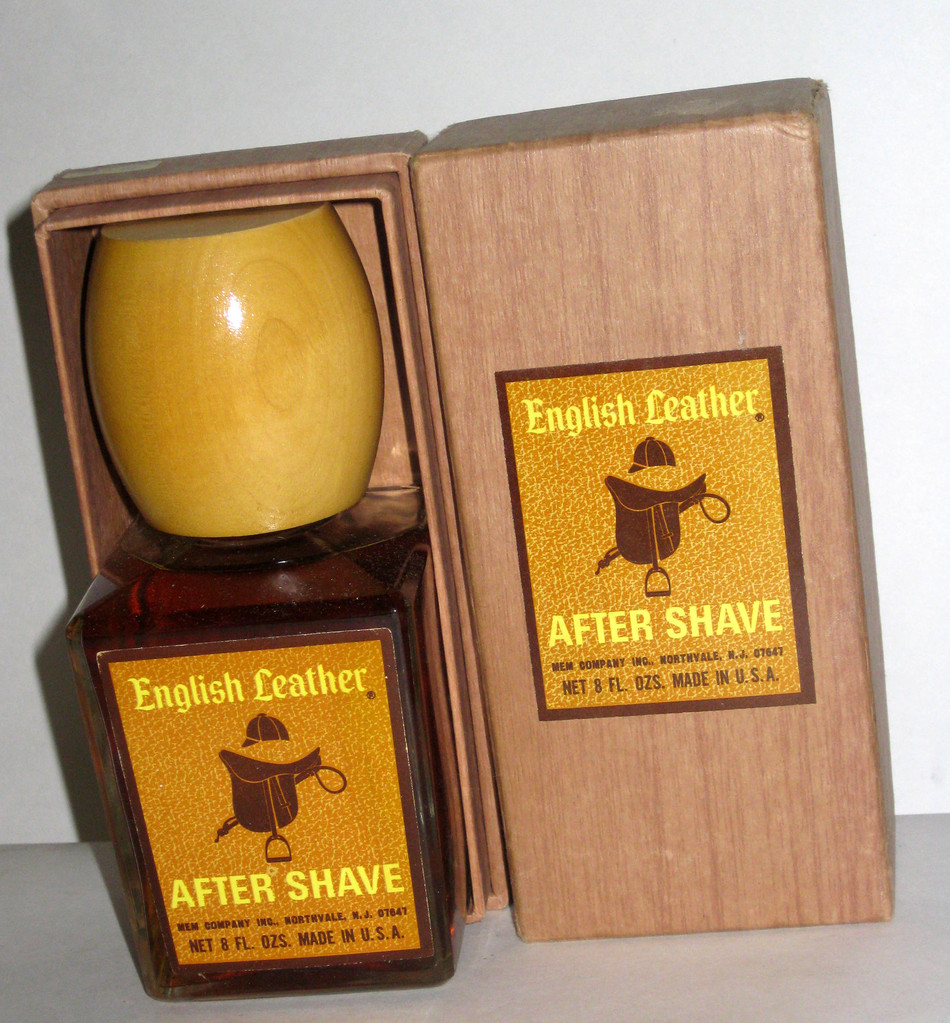
One of the things I fear most about becoming a "man of a certain age" is picking up that essence of old guy and not even being aware of it. So, again I'll make the effort. Unlike the good old days, I won't be splashing on the English Leather with an extra spritz behind each ear just in case a slow song comes on and a dance breaks out, but again I'll make a good effort.

The sounds for a perfect date night are still key. Back then I would have been picking her up in my VW Bus (I still can't believe her Dad ever let her go out with me). Having just the right song cued up on the 8-Track player was essential. Something like "Wouldn't It Be Nice" by the Beach Boys would be a good choice:

Wouldn't it be nice if we were older
Then we wouldn't have to wait so long
And wouldn't it be nice to live together
In the kind of world where we belong

You know its gonna make it that much better
When we can say goodnight and stay together

Wouldn't it be nice if we could wake up
In the morning when the day is new
And after having spent the day together
Hold each other close the whole night through

Happy times together we've been spending
I wish that every kiss was never-ending
Wouldn't it be nice

Okay, now I've actually embarrassed myself.

Tonight I might Bluetooth® sync my iPhone® and have this oldie-but-goody by The Beatles ready to go:

When I get older, losing my hair, many years from now
Will you still be sending me a valentine, birthday greetings, bottle of wine?

If I'd been out 'til quarter to three, would you lock the door?

Will you still need me, will you still feed me when I'm sixty-four?

Date Night tastes once included stuff like a Shakey's Pizza followed by an ice cream float at Weber's Root Beer Stand. Tonight? Well since I'm less than two weeks out from gall bladder surgery, I'll probably go with a piece of grilled chicken and dry baked potato. Maybe we'll splurge and go for fro-yo after. What a romantic? Right?

Oh, and the Date Night touches? Now, that's really none of your business is it?

Go have your own date night.